

Adjusting the truss rod on a guitar is one of the most important aspects of maintaining your instrument. It’s an easy task that doesn’t take much time, but can make a big difference in the sound and playability of your guitar.
In this article, you’ll learn how to adjust your guitar’s truss rod, do a tap test to check it, and get some tips about what to be aware of when making adjustments.
So read on for everything you need to know about how to adjust your truss rod!
What is a truss rod
A truss rod typically consists of a metal bar running along the length of a guitar neck that can be adjusted to help it resist string tension. This bar is usually steel, but other materials like graphite may also be used.
Adjusting the truss rod affects three main aspects: neck relief, action, and intonation.
Proper adjustment can help you customize your guitar’s setup to play optimally regardless of weather or player style changes.
How to adjust the truss rod on a guitar – Step-by-step guide
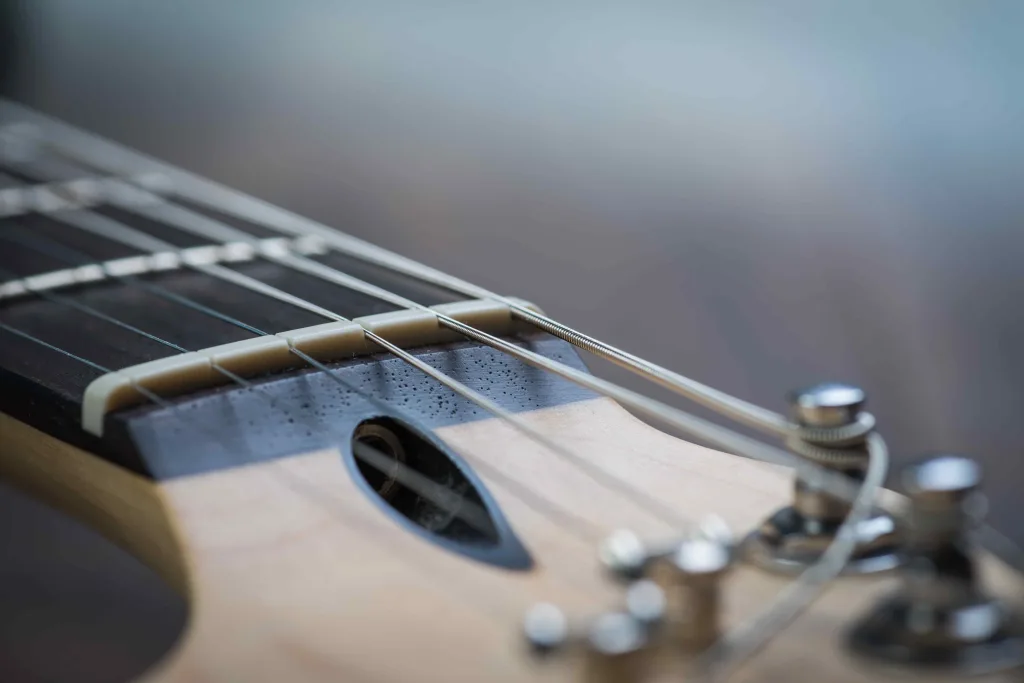
Now that you understand what a truss rod is, you can learn how to properly adjust it. Just follow these steps, and you’ll be ready in no time.
Prepare the tools you need
To get the job done right, you’ll need the proper tools.
- Two capos: to hold down strings while making any adjustments to the truss rod.
- Feeler gauges: for setting the correct string action on your guitar.
- A small screwdriver: for removing a truss rod cover before adjusting it.
- A hex key or wrench: to make accurate truss rod adjustments; make sure that it fits the truss rod nut before starting.
All these items should be ready before attempting any adjustment so that you can work smoothly and efficiently.
Check the Neck Relief
To check the neck relief make sure to:
Tune your guitar
Tighten your strings and get the right tension to ensure your neck has the right amount of curve.
Use the same strings you already play with and tune your guitar as usual. Different gauges may require additional adjustments.
It’s important to keep the strings on when adjusting your truss rod.
Taking them off can make your adjustment inaccurate.
Over time, the pressure from the strings can cause an increase in bowing. This means that even if you had good neck relief when you first bought it, you’d need to check and adjust it periodically.
Check the neck to determine if it’s straight
Look down the neck of your instrument to see if it’s bowed or curved in any way. Close one eye and peer down the neck from the headstock to get a general idea of its straightness.
If you notice that the neck is bowed outward or inward, then you’ll know where to start with adjusting the relief. It’s important to note that this is merely an exercise in sight, so don’t worry if you haven’t done this before and don’t know exactly what you’re looking for.
Attach capos to the 1st and 15th frets
Securely clamp two capos to the 1st and 15th frets of your guitar.
This creates a straight line that you can use to measure neck relief. It eliminates the issue of extra string height from both the nut and bridge, making it easier to accurately measure your neck’s relief.
If you don’t have two capos, fretting the low E string on both frets is an alternative solution. However, this will require another set of hands for help.
For shorter-scale guitars, where a capo can’t fit on the 15th fret, place it as close to the body as possible so you still have a straight line.
Take a measure of the gap between the string and the 7th fret
Using your feeler gauges, measure the gap between your guitar’s 6th string and the 7th fret to see if you need to adjust your neck relief.
If it fits snugly between the string and the top of the fret, then your relief is just fine. But if there’s resistance or no space at all when you insert the feeler gauge, then you’ll need to increase your relief.
On the other hand, if there’s still space between them after inserting it, then you should decrease your relief.
Make sure to use a 0.007 inches (0.18 mm) feeler gauge as a starting point for an optimal neck relief adjustment.
Correcting Neck Relief

Correcting neck relief is an important step in maintaining the playability of your guitar.
To do so, you’ll need to:
Remove the truss rod cover (if necessary)
Remove that pesky truss rod cover if it’s blocking your way.
On some acoustic guitars, this can be accessed through the soundhole, so look there if you don’t see a plate or notch in the headstock.
If there’s a cover, use a screwdriver to carefully remove it and set it aside.
Make sure you have easy access to the truss rod before continuing with any adjustments.
Fit the right hex key to turn your truss rod
Make sure the hex key fits right into the truss rod and doesn’t slip out. This is important because if you use a tool that doesn’t fit properly, you risk damaging your truss rod or even stripping it altogether.
Always be careful when turning any hex key as they can easily strip if over-tightened.
Turn the truss rod
Give the truss rod a slight twist, and don’t overdo it.
When adjusting your guitar truss rod, you need to be precise and accurate. Turning it too much can damage the instrument or cause other tuning issues.
It’s recommended to only turn the truss rod nut it 1/8 of a turn at a time. Whether you’ll turn the truss rod nut clockwise or counterclockwise, depending on whether you want to decrease or increase relief.
To make sure you haven’t exceeded this amount, think of 1/8 as half of a quarter turn.
In this way, you’ll be able to adjust the truss rod with confidence and accuracy for optimal performance from your guitar.
Retune your guitar and check the neck relief
Checking your instrument’s relief after adjustments is essential to ensure it’s playing its best. So, take a few moments to retune and see how it feels.
Clamp your guitar strings down at the 1st and 15th fret (or whichever higher fret you used before) and use a feeler gauge to check for any changes in relief.
If you find that you’ve gone too far, adjust the truss rod back in the opposite direction until it feels right.
Neck relief can be a personal thing, so if it feels good when you play, then there may be no need for further adjustment, even if the measurements don’t match what you wanted.
Adjust the truss rod another 1/8 turn or less if necessary
If the desired relief still hasn’t been reached, give your instrument’s neck a slight tweak of no more than an eighth of a turn.
To do so, use the truss rod adjustment tool to carefully turn it clockwise or counterclockwise as needed. Don’t forget that even tiny adjustments can make a difference, so don’t force it!
It might take some time and patience to get it just right. Remember to retune your guitar after each adjustment and check for the desired amount of relief.
Check your relief again after 24 hours
After 24 hours, check the relief again and make any necessary adjustments.
It’s important to let the neck settle for a full day so that you can get a more accurate reading on the amount of relief. Avoid moving or changing temperatures during this period as it could affect the truss rod adjustment you’ve made.
How to do the tap test
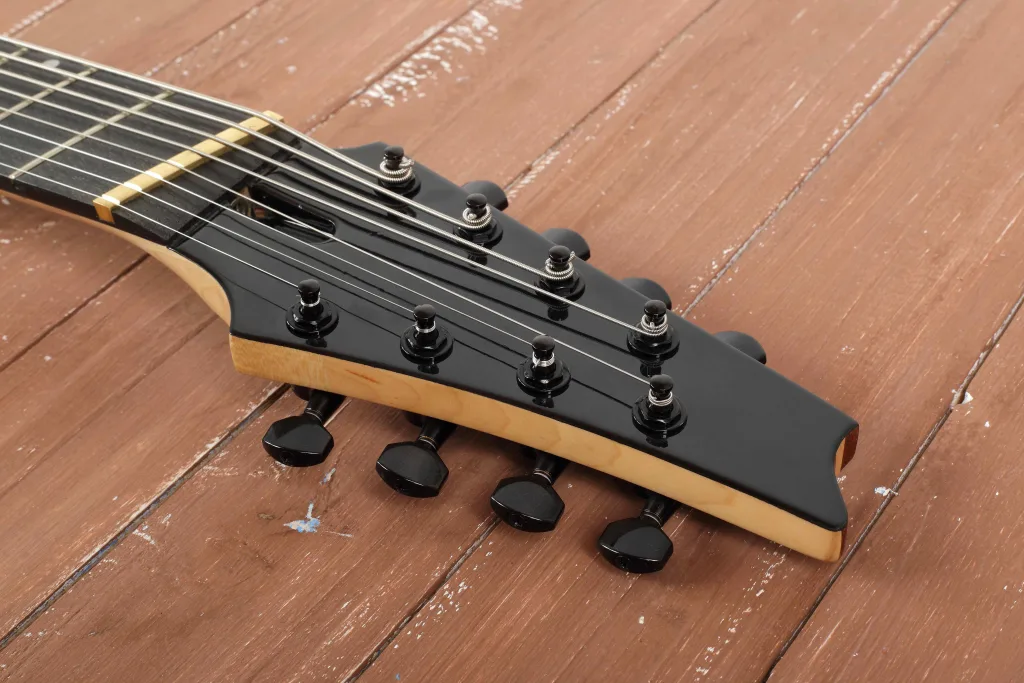
To perform the tap test, start without a capo. Fret at the first fret and use your pinky finger near where the guitar joins the body. Lightly press the string until it touches the top of the fret, and feel how much space is between them.
The amount of space between these two parts can tell you if there’s too much or too little relief in your guitar neck. If there’s too little space, it means that there’s backbow; if there’s too much, then upbow or excessive relief is present.
Repeat this process on different frets. Check after 24 hours to see if any change occurred due to tension shifts from tuning or playing.
Tips about Adjusting the Truss Rod
Adjusting your truss rod can make a significant difference in the sound of your stringed instrument, so it’s worth taking the time to get it just right.
When adjusting the truss rod on your guitar, make sure you give it plenty of time to acclimate before attempting any adjustments. This is particularly important if you’ve recently traveled with the guitar and experienced changing temperatures and humidity levels.
Have all of your tools ready before beginning work, including luthier tools if necessary. Make small adjustments at a time and wait for 24 hours between each quarter turn of the truss rod.
If you don’t feel comfortable making changes yourself, take it to an experienced luthier who can do this job safely and effectively.
Conclusion
Your guitar’s truss rod is the key to keeping it in tune and playing smoothly. With a little bit of knowledge and an understanding of how your instrument works, you can adjust the truss rod yourself.
Do it once or twice, and adjusting the truss rod will become second nature.
You can watch this video if you need more clarity:
FAQ
How often should I adjust the truss rod?
How often to adjust the truss rod depending on the amount of use and the environment you play in.
If you play more often or live in an area with extreme temperatures and humidity levels, it’s recommended to adjust it every few months.
Are there different types of truss rods?
Yes, there are different types of truss rods. Most electric guitars have either a single-action or double-action truss rod. Single-action truss rods allow you to adjust the neck relief only, while dual-action truss rods can both decrease and increase the amount of bow in the neck.
Some higher end instruments use adjustable truss rods which allow for more control over the instrument’s action and playability.
What are the signs that the truss rod needs to be adjusted?
The signs that the truss rod is out of tune are subtle but unmistakable: you’ll feel a slight buzz in the strings when playing open chords, and the neck might feel crooked or warped when you fret notes.
If your guitar is exhibiting these symptoms, then chances are it’s time to adjust the truss rod!
Is it safe to adjust the truss rod myself?
It’s perfectly okay to adjust the truss rod yourself if you’re confident in your abilities and have done some research to ensure that you know what you’re doing.
Just make sure to take your time and follow all instructions carefully for best results.

It’s hard to find knowledgeable people on this topic, but you sound like you know what you’re talking about! Thanks
Together with every little thing that seems to be developing within this subject matter, all your viewpoints tend to be somewhat refreshing. On the other hand, I beg your pardon, because I do not give credence to your whole suggestion, all be it stimulating none the less. It would seem to everybody that your opinions are generally not completely rationalized and in actuality you are your self not even totally convinced of the point. In any event I did appreciate looking at it.
Rattling wonderful information can be found on web site. “I said I didn’t want to run for president. I didn’t ask you to believe me.” by Mario M Cuomo.
I do trust all of the concepts you have offered to your post. They are really convincing and will certainly work. Nonetheless, the posts are very quick for beginners. May you please extend them a bit from subsequent time? Thank you for the post.
I think this is among the most significant information for me. And i’m glad reading your article. But want to remark on few general things, The web site style is ideal, the articles is really nice :D. Good job, cheers
Howdy would you mind stating which blog platform you’re working with? I’m going to start my own blog soon but I’m having a tough time deciding between BlogEngine/Wordpress/B2evolution and Drupal. The reason I ask is because your design and style seems different then most blogs and I’m looking for something unique. P.S Apologies for getting off-topic but I had to ask!
I have been absent for a while, but now I remember why I used to love this website. Thanks, I will try and check back more often. How frequently you update your website?
I get pleasure from, result in I discovered exactly what I used to be having a look for. You’ve ended my 4 day lengthy hunt! God Bless you man. Have a nice day. Bye
I really like your writing style, fantastic information, regards for posting :D. “The superfluous is very necessary.” by Francois Marie Arouet Voltaire.
I believe this web site holds some very good information for everyone :D.
You can definitely see your enthusiasm in the work you write. The sector hopes for more passionate writers like you who are not afraid to say how they believe. Always go after your heart. “In order to preserve your self-respect, it is sometimes necessary to lie and cheat.” by Robert Byrne.
There is noticeably a bundle to find out about this. I assume you made certain nice factors in features also.
Regards for this grand post, I am glad I noticed this internet site on yahoo.
Aw, this was a really nice post. In thought I want to put in writing like this moreover – taking time and precise effort to make a very good article… but what can I say… I procrastinate alot and on no account seem to get one thing done.
Good post. I be taught something more challenging on completely different blogs everyday. It would at all times be stimulating to read content material from other writers and apply just a little one thing from their store. I’d prefer to make use of some with the content material on my weblog whether you don’t mind. Natually I’ll offer you a link on your internet blog. Thanks for sharing.
I have read several excellent stuff here. Definitely price bookmarking for revisiting. I wonder how a lot effort you set to create such a great informative website.
Generally I do not read article on blogs, but I would like to say that this write-up very forced me to try and do it! Your writing style has been surprised me. Thanks, quite nice post.
I’m impressed, I have to say. Actually not often do I encounter a weblog that’s each educative and entertaining, and let me tell you, you’ve gotten hit the nail on the head. Your concept is excellent; the problem is one thing that not enough individuals are speaking intelligently about. I’m very blissful that I stumbled across this in my seek for something regarding this.
Hiya, I am really glad I have found this info. Today bloggers publish only about gossips and internet and this is really irritating. A good website with exciting content, this is what I need. Thank you for keeping this web-site, I will be visiting it. Do you do newsletters? Can’t find it.
Thank you for any other informative website. The place else may just I am getting that kind of information written in such a perfect manner? I’ve a project that I’m simply now operating on, and I have been at the look out for such information.
I keep listening to the news bulletin talk about receiving free online grant applications so I have been looking around for the best site to get one. Could you advise me please, where could i find some?
Woh I enjoy your content, saved to fav! .
you are in point of fact a just right webmaster. The site loading velocity is amazing. It seems that you’re doing any distinctive trick. Furthermore, The contents are masterwork. you’ve done a excellent process in this matter!
Hi there! I just wanted to ask if you ever have any issues with hackers? My last blog (wordpress) was hacked and I ended up losing months of hard work due to no backup. Do you have any methods to protect against hackers?
You are a very smart person!
Good write-up, I am normal visitor of one’s web site, maintain up the nice operate, and It’s going to be a regular visitor for a long time.
The next time I read a blog, I hope that it doesnt disappoint me as much as this one. I mean, I know it was my choice to read, but I actually thought youd have something interesting to say. All I hear is a bunch of whining about something that you could fix if you werent too busy looking for attention.
I love it when people come together and share opinions, great blog, keep it up.
You can definitely see your skills within the work you write. The sector hopes for more passionate writers like you who aren’t afraid to say how they believe. At all times follow your heart. “A simple fact that is hard to learn is that the time to save money is when you have some.” by Joe Moore.
you’re really a good webmaster. The site loading speed is incredible. It seems that you’re doing any unique trick. Furthermore, The contents are masterwork. you’ve done a great job on this topic!
I have been browsing online more than 3 hours today, yet I never found any interesting article like yours. It is pretty worth enough for me. In my view, if all website owners and bloggers made good content as you did, the internet will be much more useful than ever before.
I discovered your weblog website on google and verify a few of your early posts. Continue to maintain up the excellent operate. I just further up your RSS feed to my MSN News Reader. Searching for forward to reading more from you in a while!…
I truly enjoy studying on this website, it holds wonderful content. “Never fight an inanimate object.” by P. J. O’Rourke.
Utterly composed subject material, Really enjoyed reading through.
Aavant produces the best photography, event and theatre backdrops in the world and works for almost all the biggest players in the world. Being in backdrops industry for last two decades it is the largest player in the world, providing highest quality backdrops to every buyer from USA to Australia.
Your place is valueble for me. Thanks!…
I am constantly browsing online for articles that can aid me. Thx!
TURMERIC TRICK FOR MEN
TURMERIC TRICK
The other day, while I was at work, my cousin stole my iphone and tested to see if it can survive a 25 foot drop, just so she can be a youtube sensation. My iPad is now destroyed and she has 83 views. I know this is completely off topic but I had to share it with someone!
TURMERIC TRICK
Useful info. Fortunate me I discovered your website by accident, and I am surprised why this coincidence didn’t took place earlier! I bookmarked it.
I really appreciate this post. I have been looking everywhere for this! Thank goodness I found it on Bing. You’ve made my day! Thanks again
I really enjoy looking through on this web site, it has good blog posts. “One doesn’t discover new lands without consenting to lose sight of the shore for a very long time.” by Andre Gide.
I went over this web site and I think you have a lot of fantastic information, saved to fav (:.
I have been exploring for a bit for any high quality articles or weblog posts in this kind of space . Exploring in Yahoo I at last stumbled upon this site. Reading this info So i’m glad to show that I’ve an incredibly just right uncanny feeling I discovered exactly what I needed. I such a lot no doubt will make certain to don’t put out of your mind this site and give it a glance regularly.
I’m not that much of a online reader to be honest but your blogs really nice, keep it up! I’ll go ahead and bookmark your website to come back in the future. Cheers
I’d have to examine with you here. Which is not one thing I usually do! I take pleasure in reading a post that may make folks think. Additionally, thanks for permitting me to comment!
Outstanding post however , I was wanting to know if you could write a litte more on this topic? I’d be very thankful if you could elaborate a little bit further. Thank you!
Hello would you mind letting me know which webhost you’re utilizing? I’ve loaded your blog in 3 completely different internet browsers and I must say this blog loads a lot quicker then most. Can you recommend a good hosting provider at a fair price? Thank you, I appreciate it!
I’m impressed, I have to say. Really hardly ever do I encounter a weblog that’s each educative and entertaining, and let me tell you, you’ve got hit the nail on the head. Your thought is excellent; the problem is one thing that not sufficient individuals are talking intelligently about. I am very completely satisfied that I stumbled throughout this in my search for one thing relating to this.
Your home is valueble for me. Thanks!…
Its such as you learn my mind! You appear to know so much approximately this, like you wrote the guide in it or something. I think that you can do with some p.c. to pressure the message house a little bit, however instead of that, that is great blog. A fantastic read. I will certainly be back.
I have recently started a web site, the info you offer on this web site has helped me tremendously. Thanks for all of your time & work. “Yield not to evils, but attack all the more boldly.” by Virgil.
GELATIN TRICK FOR WEIGHT LOSS
HORSE GELATIN
I got good info from your blog
Excellent blog here! Also your website loads up fast! What host are you using? Can I get your affiliate link to your host? I wish my website loaded up as quickly as yours lol
Hey there are using WordPress for your blog platform? I’m new to the blog world but I’m trying to get started and create my own. Do you need any coding expertise to make your own blog? Any help would be greatly appreciated!
Hello.This article was extremely motivating, especially because I was investigating for thoughts on this topic last Monday.
Im no longer positive where you are getting your info, but good topic. I must spend a while studying more or figuring out more. Thank you for great information I was looking for this info for my mission.
Some really nice and utilitarian information on this site, besides I believe the design and style holds great features.
Hey very cool blog!! Man .. Excellent .. Amazing .. I will bookmark your blog and take the feeds also…I am happy to find numerous useful information here in the post, we need develop more techniques in this regard, thanks for sharing. . . . . .
You have brought up a very wonderful details, thanks for the post.
jellyfill
whoah this blog is excellent i really like reading your posts. Keep up the good work! You recognize, lots of people are searching around for this information, you could help them greatly.
I’ll right away clutch your rss feed as I can not find your e-mail subscription hyperlink or newsletter service. Do you have any? Kindly let me recognise in order that I may subscribe. Thanks.
Great work! This is the type of info that should be shared around the web. Shame on Google for not positioning this post higher! Come on over and visit my web site . Thanks =)
15 SECOND NATIVE TRICK
Greetings! Very helpful advice on this article! It is the little changes that make the biggest changes. Thanks a lot for sharing!
horse gelatin reviews
horse gelatin trick recipe
horse gelatin for men reviews
I am pleased that I discovered this weblog, precisely the right information that I was searching for! .
I like this weblog so much, saved to favorites.
The other day, while I was at work, my cousin stole my iphone and tested to see if it can survive a 30 foot drop, just so she can be a youtube sensation. My iPad is now broken and she has 83 views. I know this is entirely off topic but I had to share it with someone!
HORSE GELATIN FOR MEN RECIPE
Thankyou for all your efforts that you have put in this. very interesting info .
jellyfil supplement
Hey There. I found your weblog using msn. That is a really neatly written article. I will be sure to bookmark it and come back to read extra of your useful information. Thank you for the post. I will definitely comeback.
Thank you so much for giving everyone a very spectacular opportunity to check tips from this website. It’s usually so awesome and as well , jam-packed with amusement for me personally and my office acquaintances to visit your blog nearly thrice per week to learn the new stuff you have got. Not to mention, I’m also at all times motivated considering the eye-popping pointers you give. Selected 4 areas on this page are basically the most suitable I’ve ever had.
I have recently started a web site, the info you provide on this website has helped me greatly. Thanks for all of your time & work.
what is the horse gelatin trick recipe
Unquestionably imagine that which you said. Your favorite justification seemed to be on the internet the simplest thing to consider of. I say to you, I certainly get irked whilst other people think about issues that they just don’t understand about. You controlled to hit the nail upon the highest and also defined out the entire thing with no need side effect , folks could take a signal. Will likely be back to get more. Thanks
Thank you, I’ve recently been searching for info about this subject for ages and yours is the greatest I’ve discovered till now. But, what about the conclusion? Are you sure about the source?
Hi there! This post couldn’t be written any better! Reading through this post reminds me of my previous room mate! He always kept talking about this. I will forward this article to him. Pretty sure he will have a good read. Thank you for sharing!
Yeah bookmaking this wasn’t a bad determination great post! .
You made some good points there. I did a search on the topic and found nearly all persons will agree with your blog.
Great blog here! Also your website loads up fast! What host are you using? Can I get your affiliate link to your host? I wish my website loaded up as fast as yours lol
My programmer is trying to persuade me to move to .net from PHP. I have always disliked the idea because of the costs. But he’s tryiong none the less. I’ve been using WordPress on several websites for about a year and am nervous about switching to another platform. I have heard fantastic things about blogengine.net. Is there a way I can import all my wordpress posts into it? Any kind of help would be really appreciated!
Really enjoyed this update, how can I make is so that I get an update sent in an email every time you write a new update?
Oh my goodness! a tremendous article dude. Thank you Nonetheless I am experiencing problem with ur rss . Don’t know why Unable to subscribe to it. Is there anyone getting equivalent rss downside? Anyone who knows kindly respond. Thnkx
I love it when people come together and share opinions, great blog, keep it up.
I enjoy you because of your own work on this web page. Betty really likes getting into investigations and it’s obvious why. We all hear all relating to the powerful method you offer functional guides via this web blog and as well as increase response from website visitors on the area and our simple princess is now understanding so much. Enjoy the rest of the year. You are performing a brilliant job.
Its excellent as your other content : D, appreciate it for posting.
Thanks for another informative blog. Where else could I get that kind of information written in such an ideal way? I’ve a project that I am just now working on, and I’ve been on the look out for such info.
Hey there! I just wanted to ask if you ever have any problems with hackers? My last blog (wordpress) was hacked and I ended up losing a few months of hard work due to no data backup. Do you have any methods to stop hackers?
Yay google is my queen helped me to find this outstanding web site! .
horse gelatin trick for men
You really make it seem so easy together with your presentation but I in finding this topic to be really one thing that I believe I might never understand. It sort of feels too complicated and very large for me. I am looking ahead for your subsequent put up, I’ll attempt to get the hang of it!
I think this is one of the most important info for me. And i am glad reading your article. But want to remark on some general things, The web site style is great, the articles is really excellent :D. Good job, cheers
JELLYFIL
whoah this weblog is wonderful i love reading your articles. Keep up the good work! You realize, a lot of persons are searching round for this information, you could help them greatly.
There is clearly a bunch to realize about this. I believe you made some good points in features also.
Hi, just required you to know I he added your site to my Google bookmarks due to your layout. But seriously, I believe your internet site has 1 in the freshest theme I??ve came across. It extremely helps make reading your blog significantly easier.
JELLYFIL
My husband and i were very lucky when Edward could do his researching with the ideas he came across from your very own site. It is now and again perplexing just to continually be making a gift of guidance other folks may have been making money from. We keep in mind we have you to thank for this. All of the illustrations you’ve made, the easy blog menu, the relationships you give support to instill – it is most incredible, and it is aiding our son and the family reason why this content is satisfying, and that is quite essential. Thank you for all!
Hey There. I discovered your weblog using msn. This is a very neatly written article. I’ll make sure to bookmark it and return to learn extra of your useful information. Thanks for the post. I will definitely return.
I love it when people come together and share opinions, great blog, keep it up.
Howdy! This is my 1st comment here so I just wanted to give a quick shout out and say I really enjoy reading your articles. Can you suggest any other blogs/websites/forums that deal with the same topics? Thank you!
Rattling wonderful visual appeal on this web site, I’d rate it 10 10.
Wohh just what I was searching for, regards for putting up.
An interesting discussion is worth comment. I think that you should write more on this topic, it might not be a taboo subject but generally people are not enough to speak on such topics. To the next. Cheers
Hi there, You’ve done a fantastic job. I’ll certainly digg it and personally recommend to my friends. I am sure they’ll be benefited from this web site.
Woh I like your posts, saved to fav! .
HORSE GELATIN TRICK FOR MEN
Your place is valueble for me. Thanks!…
Some genuinely interesting details you have written.Assisted me a lot, just what I was looking for :D.
After all, what a great site and informative posts, I will upload inbound link – bookmark this web site? Regards, Reader.
good post.Ne’er knew this, appreciate it for letting me know.
you have a great blog here! would you like to make some invite posts on my blog?
Well I sincerely enjoyed reading it. This subject procured by you is very helpful for accurate planning.
Thanks for sharing superb informations. Your site is very cool. I am impressed by the details that you’ve on this blog. It reveals how nicely you understand this subject. Bookmarked this website page, will come back for extra articles. You, my pal, ROCK! I found just the info I already searched all over the place and just could not come across. What a perfect web site.
Good, I should definitely pronounce, impressed with your web site. I had no trouble navigating through all the tabs and related info ended up being truly simple to do to access. I recently found what I hoped for before you know it in the least. Quite unusual. Is likely to appreciate it for those who add forums or something, site theme . a tones way for your customer to communicate. Excellent task.
You actually make it appear so easy together with your presentation however I to find this topic to be really something which I feel I’d never understand. It seems too complicated and very large for me. I am looking ahead in your subsequent submit, I’ll try to get the grasp of it!
so much great info on here, :D.
Hey there! This is my first visit to your blog! We are a team of volunteers and starting a new project in a community in the same niche. Your blog provided us valuable information to work on. You have done a extraordinary job!
jellyfill review
Its like you read my mind! You seem to know so much about this, like you wrote the book in it or something. I think that you could do with some pics to drive the message home a bit, but other than that, this is great blog. A fantastic read. I’ll certainly be back.
I genuinely prize your piece of work, Great post.
I have learn a few just right stuff here. Certainly price bookmarking for revisiting. I surprise how much effort you set to create such a excellent informative site.
Superb blog! Do you have any tips for aspiring writers? I’m hoping to start my own blog soon but I’m a little lost on everything. Would you recommend starting with a free platform like WordPress or go for a paid option? There are so many choices out there that I’m totally confused .. Any recommendations? Bless you!
I believe this internet site has some rattling fantastic information for everyone. “I have learned to use the word ‘impossible’ with the greatest caution.” by Wernher von Braun.
I dugg some of you post as I thought they were handy invaluable
Some genuinely wonderful blog posts on this site, appreciate it for contribution. “A religious awakening which does not awaken the sleeper to love has roused him in vain.” by Jessamyn West.
Wow! This can be one particular of the most useful blogs We have ever arrive across on this subject. Actually Magnificent. I’m also an expert in this topic so I can understand your hard work.
I have been surfing on-line more than three hours lately, but I by no means found any attention-grabbing article like yours. It’s pretty price enough for me. In my opinion, if all webmasters and bloggers made just right content as you did, the net might be a lot more helpful than ever before. “Revolution is not a onetime event.” by Audre Lorde.
Thanks for sharing superb informations. Your web-site is very cool. I’m impressed by the details that you’ve on this web site. It reveals how nicely you perceive this subject. Bookmarked this web page, will come back for extra articles. You, my pal, ROCK! I found just the information I already searched all over the place and just couldn’t come across. What a perfect web-site.
It is in reality a nice and helpful piece of info. I am happy that you just shared this helpful info with us. Please keep us informed like this. Thank you for sharing.
Admiring the dedication you put into your website and in depth information you offer. It’s awesome to come across a blog every once in a while that isn’t the same unwanted rehashed material. Great read! I’ve saved your site and I’m including your RSS feeds to my Google account.
Heya! I just wanted to ask if you ever have any problems with hackers? My last blog (wordpress) was hacked and I ended up losing a few months of hard work due to no back up. Do you have any solutions to protect against hackers?
Hi there! I just would like to give an enormous thumbs up for the great information you have got here on this post. I will be coming back to your weblog for more soon.
You really make it seem so easy with your presentation but I find this matter to be actually something that I think I would never understand. It seems too complicated and very broad for me. I am looking forward for your next post, I’ll try to get the hang of it!
Great post. I am facing a couple of these problems.
This design is spectacular! You most certainly know how to keep a reader amused. Between your wit and your videos, I was almost moved to start my own blog (well, almost…HaHa!) Great job. I really loved what you had to say, and more than that, how you presented it. Too cool!
Greetings from Carolina! I’m bored to tears at work so I decided to check out your site on my iphone during lunch break. I enjoy the information you provide here and can’t wait to take a look when I get home. I’m surprised at how fast your blog loaded on my phone .. I’m not even using WIFI, just 3G .. Anyways, amazing blog!
Hi my friend! I want to say that this post is awesome, nice written and come with almost all significant infos. I would like to see extra posts like this.
I like what you guys are up also. Such clever work and reporting! Carry on the superb works guys I have incorporated you guys to my blogroll. I think it will improve the value of my website :).
This web page is known as a walk-by way of for the entire data you wanted about this and didn’t know who to ask. Glimpse here, and also you’ll definitely discover it.
I’ll immediately grab your rss feed as I can’t find your e-mail subscription link or e-newsletter service. Do you have any? Kindly let me know in order that I could subscribe. Thanks.
I’ve been absent for a while, but now I remember why I used to love this web site. Thanks, I will try and check back more frequently. How frequently you update your site?
I love the efforts you have put in this, regards for all the great articles.
As I web-site possessor I believe the content material here is rattling great , appreciate it for your efforts. You should keep it up forever! Best of luck.
I am thankful that I found this web blog, exactly the right information that I was searching for! .
I conceive this web site has got some rattling good information for everyone :D. “As ill-luck would have it.” by Miguel de Cervantes.
Heya! I just wanted to ask if you ever have any issues with hackers? My last blog (wordpress) was hacked and I ended up losing months of hard work due to no back up. Do you have any solutions to protect against hackers?
This web site is really a walk-via for all the info you wanted about this and didn’t know who to ask. Glimpse right here, and also you’ll positively discover it.
It is really a nice and helpful piece of info. I am glad that you shared this useful information with us. Please keep us informed like this. Thanks for sharing.
Someone essentially help to make seriously articles I would state. This is the very first time I frequented your web page and thus far? I surprised with the research you made to create this particular publish extraordinary. Magnificent job!
Hi my family member! I want to say that this article is amazing, nice written and include almost all vital infos. I would like to look more posts like this .
After study a couple of of the weblog posts on your web site now, and I really like your manner of blogging. I bookmarked it to my bookmark web site list and shall be checking again soon. Pls try my website as nicely and let me know what you think.
Great remarkable things here. I’m very satisfied to look your article. Thanks a lot and i am looking forward to contact you. Will you please drop me a e-mail?
This is a very good tips especially to those new to blogosphere, brief and accurate information… Thanks for sharing this one. A must read article.
Hi, Neat post. There’s a problem with your website in internet explorer, would check this… IE still is the market leader and a huge portion of people will miss your great writing because of this problem.
I respect your work, thankyou for all the good content.
Would love to perpetually get updated great weblog! .
Some truly excellent articles on this site, thank you for contribution. “There is one universal gesture that has one universal message–a smile” by Valerie Sokolosky.
Thank you for every other informative blog. Where else could I am getting that type of information written in such a perfect manner? I’ve a venture that I am just now working on, and I have been on the look out for such information.
very nice submit, i certainly love this web site, carry on it
I know this if off topic but I’m looking into starting my own blog and was wondering what all is needed to get setup? I’m assuming having a blog like yours would cost a pretty penny? I’m not very internet savvy so I’m not 100 sure. Any tips or advice would be greatly appreciated. Many thanks
I like the helpful info you supply to your articles. I’ll bookmark your weblog and check again right here regularly. I’m relatively certain I’ll be informed many new stuff right here! Best of luck for the following!
I have been absent for a while, but now I remember why I used to love this web site. Thanks, I will try and check back more often. How frequently you update your website?
Hey there, I think your website might be having browser compatibility issues. When I look at your blog site in Firefox, it looks fine but when opening in Internet Explorer, it has some overlapping. I just wanted to give you a quick heads up! Other then that, very good blog!
You really make it seem really easy together with your presentation but I to find this matter to be actually one thing which I believe I’d never understand. It kind of feels too complex and very wide for me. I am taking a look ahead to your next publish, I’ll attempt to get the hang of it!
Hello there, You have done a fantastic job. I will definitely digg it and individually recommend to my friends. I’m confident they will be benefited from this website.
Have you ever considered about including a little bit more than just your articles? I mean, what you say is important and all. However think about if you added some great visuals or video clips to give your posts more, “pop”! Your content is excellent but with pics and clips, this blog could certainly be one of the greatest in its field. Amazing blog!
Greetings! This is my first visit to your blog! We are a group of volunteers and starting a new initiative in a community in the same niche. Your blog provided us valuable information to work on. You have done a marvellous job!
We are a group of volunteers and starting a new scheme in our community. Your website provided us with valuable info to work on. You have done an impressive job and our entire community will be grateful to you.
Very interesting points you have mentioned, thanks for posting.
Some truly nice and useful information on this web site, as well I think the design contains great features.
You made some decent points there. I looked on the internet for the issue and found most people will go along with with your site.
Some truly great content on this website , thankyou for contribution.
Very interesting topic, regards for putting up. “The season of failure is the best time for sowing the seeds of success.” by Paramahansa Yogananda.
This is the right blog for anyone who wants to find out about this topic. You realize so much its almost hard to argue with you (not that I actually would want…HaHa). You definitely put a new spin on a topic thats been written about for years. Great stuff, just great!
Hello, Neat post. There is an issue with your site in internet explorer, would check this?K IE nonetheless is the marketplace leader and a large part of other folks will pass over your magnificent writing due to this problem.
There are certainly numerous details like that to take into consideration. That could be a great point to deliver up. I supply the thoughts above as normal inspiration however clearly there are questions just like the one you deliver up where an important factor can be working in honest good faith. I don?t know if greatest practices have emerged round issues like that, however I am positive that your job is clearly identified as a fair game. Each girls and boys really feel the influence of only a second’s pleasure, for the remainder of their lives.
Thank you for sharing excellent informations. Your site is so cool. I am impressed by the details that you’ve on this website. It reveals how nicely you perceive this subject. Bookmarked this web page, will come back for extra articles. You, my friend, ROCK! I found simply the information I already searched all over the place and simply could not come across. What a great website.
I like what you guys are up also. Such smart work and reporting! Carry on the excellent works guys I have incorporated you guys to my blogroll. I think it’ll improve the value of my web site 🙂
The subsequent time I read a weblog, I hope that it doesnt disappoint me as a lot as this one. I mean, I do know it was my choice to learn, however I truly thought youd have something attention-grabbing to say. All I hear is a bunch of whining about one thing that you could repair in the event you werent too busy looking for attention.
But wanna tell that this is very useful, Thanks for taking your time to write this.
Greetings! Very helpful advice on this article! It is the little changes that make the biggest changes. Thanks a lot for sharing!
I conceive this web site holds some real superb info for everyone :D.
As soon as I detected this website I went on reddit to share some of the love with them.
Great post. I was checking constantly this blog and I am impressed! Very useful information specially the last part 🙂 I care for such information a lot. I was looking for this certain information for a long time. Thank you and good luck.
Spot on with this write-up, I really suppose this website needs way more consideration. I’ll most likely be again to learn much more, thanks for that info.
Aw, this was a very nice post. In idea I want to put in writing like this moreover – taking time and precise effort to make an excellent article… however what can I say… I procrastinate alot and certainly not appear to get one thing done.
This blog is definitely rather handy since I’m at the moment creating an internet floral website – although I am only starting out therefore it’s really fairly small, nothing like this site. Can link to a few of the posts here as they are quite. Thanks much. Zoey Olsen
I like this site so much, saved to fav. “American soldiers must be turned into lambs and eating them is tolerated.” by Muammar Qaddafi.
I have been reading out some of your posts and it’s pretty clever stuff. I will surely bookmark your site.
I am not very wonderful with English but I come up this very easygoing to interpret.
I dugg some of you post as I cerebrated they were very helpful very beneficial
I see something genuinely special in this internet site.
This is very interesting, You are a very skilled blogger. I have joined your feed and look forward to seeking more of your great post. Also, I’ve shared your site in my social networks!
Wow that was strange. I just wrote an extremely long comment but after I clicked submit my comment didn’t show up. Grrrr… well I’m not writing all that over again. Anyway, just wanted to say wonderful blog!
Real informative and great anatomical structure of content, now that’s user friendly (:.
My programmer is trying to persuade me to move to .net from PHP. I have always disliked the idea because of the costs. But he’s tryiong none the less. I’ve been using Movable-type on various websites for about a year and am concerned about switching to another platform. I have heard very good things about blogengine.net. Is there a way I can transfer all my wordpress posts into it? Any kind of help would be really appreciated!
Nice read, I just passed this onto a friend who was doing a little research on that. And he actually bought me lunch as I found it for him smile Thus let me rephrase that: Thanks for lunch!
I like this blog so much, bookmarked.
You actually make it appear really easy along with your presentation however I find this topic to be really something which I feel I’d never understand. It sort of feels too complicated and extremely wide for me. I am looking forward on your next put up, I will attempt to get the hold of it!
I’d constantly want to be update on new articles on this web site, saved to favorites! .
Some genuinely nice and useful information on this site, too I believe the pattern contains good features.
Hello! This post couldn’t be written any better! Reading through this post reminds me of my old room mate! He always kept talking about this. I will forward this post to him. Fairly certain he will have a good read. Many thanks for sharing!
I was just searching for this info for some time. After 6 hours of continuous Googleing, at last I got it in your web site. I wonder what’s the lack of Google strategy that don’t rank this kind of informative websites in top of the list. Generally the top websites are full of garbage.
I am impressed with this internet site, very I am a big fan .
Hey would you mind letting me know which web host you’re utilizing? I’ve loaded your blog in 3 completely different internet browsers and I must say this blog loads a lot faster then most. Can you recommend a good web hosting provider at a honest price? Thanks, I appreciate it!
Wow! Thank you! I always wanted to write on my site something like that. Can I take a portion of your post to my website?
Very interesting topic, thanks for putting up.
I like this website because so much useful material on here :D.
You have brought up a very fantastic details, appreciate it for the post.
Hi there very cool web site!! Guy .. Beautiful .. Wonderful .. I’ll bookmark your site and take the feeds alsoKI’m happy to find so many useful information here in the post, we need work out more techniques in this regard, thanks for sharing. . . . . .
This is a topic close to my heart cheers, where are your contact details though?
Its good as your other content : D, regards for putting up. “A gift in season is a double favor to the needy.” by Publilius Syrus.
certainly like your web-site but you need to check the spelling on quite a few of your posts. A number of them are rife with spelling issues and I to find it very troublesome to tell the truth on the other hand I’ll surely come back again.
Excellent post. I was checking constantly this blog and I am impressed! Extremely helpful info particularly the last part 🙂 I care for such info a lot. I was looking for this particular information for a long time. Thank you and best of luck.
Thankyou for all your efforts that you have put in this. very interesting info .
Usually I don’t read post on blogs, but I wish to say that this write-up very forced me to try and do so! Your writing style has been amazed me. Thanks, very nice article.
Usually I don’t read post on blogs, but I would like to say that this write-up very forced me to try and do so! Your writing style has been amazed me. Thanks, quite nice post.
Perfectly pent content, Really enjoyed reading.
I like this web site so much, saved to my bookmarks. “Respect for the fragility and importance of an individual life is still the mark of an educated man.” by Norman Cousins.
I like what you guys are up also. Such clever work and reporting! Keep up the superb works guys I have incorporated you guys to my blogroll. I think it will improve the value of my site 🙂
Great blog! Do you have any tips for aspiring writers? I’m hoping to start my own website soon but I’m a little lost on everything. Would you recommend starting with a free platform like WordPress or go for a paid option? There are so many choices out there that I’m totally confused .. Any tips? Thank you!
Some truly superb posts on this website, thanks for contribution. “Be absolutely determined to enjoy what you do.” by Sarah Knowles Bolton.
Thanks a bunch for sharing this with all of us you really recognize what you are talking about! Bookmarked. Kindly additionally consult with my website =). We will have a hyperlink change arrangement between us!
After research a couple of of the weblog posts in your web site now, and I really like your method of blogging. I bookmarked it to my bookmark website record and will be checking again soon. Pls try my web site as properly and let me know what you think.
A lot of of whatever you articulate is astonishingly accurate and that makes me wonder why I hadn’t looked at this in this light previously. This article really did turn the light on for me personally as far as this issue goes. But there is actually 1 factor I am not really too cozy with so while I make an effort to reconcile that with the actual core idea of the position, allow me see what all the rest of the readers have to point out.Well done.
Hello! I could have sworn I’ve been to this blog before but after browsing through some of the post I realized it’s new to me. Anyways, I’m definitely happy I found it and I’ll be book-marking and checking back frequently!
obviously like your web site however you have to check the spelling on several of your posts. A number of them are rife with spelling issues and I find it very troublesome to inform the reality then again I’ll certainly come again again.
I’ve been browsing on-line greater than 3 hours these days, yet I by no means found any interesting article like yours. It’s pretty price sufficient for me. In my view, if all web owners and bloggers made just right content material as you probably did, the net will probably be much more useful than ever before.
you’re really a good webmaster. The web site loading speed is amazing. It seems that you’re doing any unique trick. Also, The contents are masterpiece. you have done a wonderful job on this topic!
Glad to be one of many visitants on this awesome web site : D.
I’ve been absent for a while, but now I remember why I used to love this website. Thanks, I will try and check back more often. How frequently you update your site?
Very interesting info!Perfect just what I was searching for!
Really Appreciate this update, is there any way I can get an alert email when you write a fresh article?
Right now it seems like Expression Engine is the best blogging platform available right now. (from what I’ve read) Is that what you’re using on your blog?
Excellent post. I was checking constantly this blog and I am impressed! Very helpful info specifically the last part 🙂 I care for such information much. I was looking for this certain information for a long time. Thank you and good luck.
I’ve been absent for some time, but now I remember why I used to love this website. Thank you, I’ll try and check back more frequently. How frequently you update your web site?
Lovely just what I was looking for.Thanks to the author for taking his time on this one.
I would like to thank you for the efforts you’ve put in writing this blog. I’m hoping the same high-grade website post from you in the upcoming also. In fact your creative writing skills has encouraged me to get my own blog now. Actually the blogging is spreading its wings fast. Your write up is a good example of it.
I just could not depart your site before suggesting that I extremely enjoyed the standard information a person provide for your visitors? Is going to be back often to check up on new posts
You are my inspiration , I have few blogs and occasionally run out from to post : (.
Enjoyed reading this, very good stuff, thanks. “Golf isn’t a game, it’s a choice that one makes with one’s life.” by Charles Rosin.
I’ve been exploring for a little for any high-quality articles or blog posts in this kind of space . Exploring in Yahoo I ultimately stumbled upon this web site. Reading this info So i’m happy to convey that I’ve a very just right uncanny feeling I found out just what I needed. I such a lot surely will make sure to do not omit this website and provides it a glance regularly.
Rattling wonderful information can be found on web blog. “Life without a friend is death without a witness.” by Eugene Benge.
You got a very wonderful website, Glad I observed it through yahoo.
I have learn a few just right stuff here. Definitely value bookmarking for revisiting. I surprise how much attempt you set to create any such wonderful informative website.
Attractive section of content. I just stumbled upon your blog and in accession capital to assert that I get actually enjoyed account your blog posts. Anyway I’ll be subscribing to your feeds and even I achievement you access consistently fast.
The very crux of your writing whilst appearing reasonable at first, did not work properly with me after some time. Somewhere within the sentences you actually were able to make me a believer but only for a short while. I still have a problem with your jumps in assumptions and you might do nicely to fill in those breaks. In the event that you can accomplish that, I could definitely end up being fascinated.
You completed some nice points there. I did a search on the subject matter and found most people will go along with with your blog.
It is in reality a great and helpful piece of information. I am glad that you simply shared this helpful info with us. Please keep us informed like this. Thank you for sharing.
you’re really a good webmaster. The web site loading speed is amazing. It seems that you are doing any unique trick. Also, The contents are masterpiece. you’ve done a excellent job on this topic!
Magnificent beat ! I wish to apprentice while you amend your web site, how could i subscribe for a blog web site? The account helped me a acceptable deal. I had been a little bit acquainted of this your broadcast offered bright clear idea
Some really prime blog posts on this site, bookmarked.
It’s hard to find knowledgeable people on this topic, but you sound like you know what you’re talking about! Thanks
Its superb as your other content : D, appreciate it for putting up. “A single day is enough to make us a little larger.” by Paul Klee.
This internet site is my inspiration , rattling wonderful pattern and perfect content material.
Very interesting info!Perfect just what I was looking for!
Excellent read, I just passed this onto a friend who was doing a little research on that. And he just bought me lunch as I found it for him smile Therefore let me rephrase that: Thanks for lunch!
Hello! I just would like to give a huge thumbs up for the great info you have here on this post. I will be coming back to your blog for more soon.
Hi, just required you to know I he added your site to my Google bookmarks due to your layout. But seriously, I believe your internet site has 1 in the freshest theme I??ve came across. It extremely helps make reading your blog significantly easier.
You made a number of fine points there. I did a search on the topic and found most folks will consent with your blog.
Respect to website author, some great entropy.
Yesterday, while I was at work, my sister stole my iPad and tested to see if it can survive a 30 foot drop, just so she can be a youtube sensation. My apple ipad is now broken and she has 83 views. I know this is entirely off topic but I had to share it with someone!
Thanks for the article, can you make it so I receive an email whenever you write a new post?
Hi, Neat post. There is a problem together with your web site in web explorer, may check thisK IE still is the market leader and a good element of other folks will miss your fantastic writing because of this problem.
I’m truly enjoying the design and layout of your website. It’s a very easy on the eyes which makes it much more enjoyable for me to come here and visit more often. Did you hire out a designer to create your theme? Excellent work!
Terrific post but I was wanting to know if you could write a litte more on this topic? I’d be very grateful if you could elaborate a little bit more. Bless you!
I like the valuable information you provide in your articles. I’ll bookmark your blog and check again here frequently. I am quite certain I’ll learn many new stuff right here! Good luck for the next!
It is perfect time to make some plans for the future and it’s time to be happy. I’ve read this post and if I could I wish to suggest you few interesting things or tips. Maybe you could write next articles referring to this article. I desire to read even more things about it!
Hi would you mind sharing which blog platform you’re working with? I’m going to start my own blog soon but I’m having a tough time deciding between BlogEngine/Wordpress/B2evolution and Drupal. The reason I ask is because your design and style seems different then most blogs and I’m looking for something completely unique. P.S My apologies for being off-topic but I had to ask!
I will immediately clutch your rss as I can’t find your e-mail subscription link or e-newsletter service. Do you have any? Kindly permit me realize in order that I could subscribe. Thanks.
I like this web blog very much so much great info .
Just desire to say your article is as astounding. The clearness in your post is just spectacular and i can assume you are an expert on this subject. Well with your permission allow me to grab your RSS feed to keep updated with forthcoming post. Thanks a million and please keep up the enjoyable work.
Thanks – Enjoyed this blog post, can you make it so I get an alert email whenever you write a fresh article?
This is a very good tips especially to those new to blogosphere, brief and accurate information… Thanks for sharing this one. A must read article.
You have remarked very interesting points! ps decent site. “Sutton lost 13 games in a row without winning a ballgame.” by Ralph Kiner.
I’m really enjoying the design and layout of your blog. It’s a very easy on the eyes which makes it much more enjoyable for me to come here and visit more often. Did you hire out a developer to create your theme? Great work!
An interesting discussion is worth comment. I think that you should write more on this topic, it might not be a taboo subject but generally people are not enough to speak on such topics. To the next. Cheers
Utterly written content material, appreciate it for entropy. “Life is God’s novel. Let him write it.” by Isaac Bashevis Singer.
Hello very cool web site!! Guy .. Excellent .. Wonderful .. I’ll bookmark your blog and take the feeds alsoKI am satisfied to find numerous useful information right here in the publish, we want develop extra techniques in this regard, thanks for sharing. . . . . .
Everything is very open and very clear explanation of issues. was truly information. Your website is very useful. Thanks for sharing.
WONDERFUL Post.thanks for share..extra wait .. …
Thanks for helping out, superb information.
Great weblog here! Also your website lots up fast! What host are you the usage of? Can I am getting your associate link for your host? I want my web site loaded up as quickly as yours lol
Hi there! I’m at work browsing your blog from my new iphone 4! Just wanted to say I love reading your blog and look forward to all your posts! Keep up the great work!
I just couldn’t depart your website before suggesting that I actually enjoyed the standard information a person provide for your visitors? Is going to be back often to check up on new posts
I’ve been exploring for a little bit for any high quality articles or blog posts in this sort of space . Exploring in Yahoo I at last stumbled upon this web site. Studying this information So i am happy to exhibit that I’ve a very just right uncanny feeling I discovered exactly what I needed. I so much definitely will make certain to do not overlook this site and give it a glance regularly.
Hey, you used to write wonderful, but the last several posts have been kinda boring?K I miss your great writings. Past few posts are just a little out of track! come on!
Woah! I’m really enjoying the template/theme of this blog. It’s simple, yet effective. A lot of times it’s difficult to get that “perfect balance” between usability and appearance. I must say that you’ve done a fantastic job with this. In addition, the blog loads very fast for me on Safari. Superb Blog!
Hello. magnificent job. I did not expect this. This is a fantastic story. Thanks!
I know this if off topic but I’m looking into starting my own weblog and was wondering what all is needed to get setup? I’m assuming having a blog like yours would cost a pretty penny? I’m not very web savvy so I’m not 100 sure. Any recommendations or advice would be greatly appreciated. Kudos
Keep functioning ,fantastic job!
I am impressed with this internet site, very I am a big fan .
Wow, wonderful blog layout! How long have you been blogging for? you made blogging look easy. The overall look of your website is magnificent, as well as the content!
I love the efforts you have put in this, appreciate it for all the great articles.
I am extremely impressed along with your writing abilities as smartly as with the format in your blog. Is this a paid theme or did you customize it your self? Either way stay up the nice high quality writing, it is uncommon to see a great blog like this one nowadays..
I like this weblog so much, saved to bookmarks. “Respect for the fragility and importance of an individual life is still the mark of an educated man.” by Norman Cousins.
I like what you guys are up too. Such clever work and reporting! Keep up the excellent works guys I’ve incorporated you guys to my blogroll. I think it’ll improve the value of my web site 🙂
Wow! This could be one particular of the most helpful blogs We’ve ever arrive across on this subject. Actually Great. I am also an expert in this topic so I can understand your hard work.
Admiring the time and energy you put into your blog and detailed information you provide. It’s awesome to come across a blog every once in a while that isn’t the same unwanted rehashed material. Fantastic read! I’ve bookmarked your site and I’m including your RSS feeds to my Google account.
Hey would you mind stating which blog platform you’re working with? I’m going to start my own blog in the near future but I’m having a hard time selecting between BlogEngine/Wordpress/B2evolution and Drupal. The reason I ask is because your layout seems different then most blogs and I’m looking for something unique. P.S Sorry for getting off-topic but I had to ask!
Whats up very cool site!! Guy .. Beautiful .. Wonderful .. I will bookmark your site and take the feeds additionally…I’m happy to seek out numerous helpful information right here in the post, we need develop more techniques on this regard, thank you for sharing.
Hello! I could have sworn I’ve been to this website before but after checking through some of the post I realized it’s new to me. Anyhow, I’m definitely glad I found it and I’ll be bookmarking and checking back frequently!
I as well think hence, perfectly pent post! .
Good day! This is my 1st comment here so I just wanted to give a quick shout out and tell you I really enjoy reading through your blog posts. Can you suggest any other blogs/websites/forums that go over the same subjects? Thanks for your time!
I conceive this website has some very great info for everyone. “He who has not looked on Sorrow will never see Joy.” by Kahlil Gibran.
Hi there! This post couldn’t be written any better! Reading through this post reminds me of my previous room mate! He always kept talking about this. I will forward this article to him. Pretty sure he will have a good read. Thank you for sharing!
Good day! I know this is kind of off topic but I was wondering if you knew where I could find a captcha plugin for my comment form? I’m using the same blog platform as yours and I’m having trouble finding one? Thanks a lot!
Very interesting information!Perfect just what I was looking for!
I like what you guys are up also. Such intelligent work and reporting! Carry on the excellent works guys I’ve incorporated you guys to my blogroll. I think it will improve the value of my site 🙂
I’d incessantly want to be update on new content on this internet site, saved to fav! .
hi!,I like your writing so much! share we communicate more about your post on AOL? I require a specialist on this area to solve my problem. Maybe that’s you! Looking forward to see you.
I went over this web site and I conceive you have a lot of superb information, saved to fav (:.
hi!,I like your writing very much! share we communicate more about your post on AOL? I require an expert on this area to solve my problem. May be that’s you! Looking forward to see you.
Whats Happening i am new to this, I stumbled upon this I’ve discovered It positively helpful and it has helped me out loads. I am hoping to give a contribution & help different customers like its aided me. Great job.
Outstanding post, you have pointed out some great details , I likewise think this s a very wonderful website.
fantastic post, very informative. I wonder why the other specialists of this sector don’t notice this. You should continue your writing. I am confident, you’ve a great readers’ base already!
You are a very intelligent person!
Someone essentially help to make seriously articles I would state. This is the first time I frequented your web page and thus far? I amazed with the research you made to make this particular publish incredible. Great job!
Hi there! This post couldn’t be written any better! Reading through this post reminds me of my previous room mate! He always kept talking about this. I will forward this article to him. Pretty sure he will have a good read. Thank you for sharing!
I was wondering if you ever thought of changing the structure of your website? Its very well written; I love what youve got to say. But maybe you could a little more in the way of content so people could connect with it better. Youve got an awful lot of text for only having one or 2 pictures. Maybe you could space it out better?
you’re in reality a excellent webmaster. The site loading velocity is amazing. It kind of feels that you are doing any distinctive trick. In addition, The contents are masterpiece. you’ve done a fantastic task in this subject!
Can I just say what a relief to search out someone who really knows what theyre talking about on the internet. You undoubtedly know methods to carry an issue to gentle and make it important. Extra folks have to learn this and understand this aspect of the story. I cant imagine youre no more fashionable because you definitely have the gift.
Pretty great post. I simply stumbled upon your weblog and wanted to mention that I have really loved surfing around your blog posts. In any case I will be subscribing on your rss feed and I am hoping you write again soon!
You got a very good website, Gladiola I discovered it through yahoo.
Do you mind if I quote a couple of your articles as long as I provide credit and sources back to your site? My website is in the exact same niche as yours and my users would definitely benefit from a lot of the information you provide here. Please let me know if this okay with you. Thanks!
Today, I went to the beach front with my children. I found a sea shell and gave it to my 4 year old daughter and said “You can hear the ocean if you put this to your ear.” She placed the shell to her ear and screamed. There was a hermit crab inside and it pinched her ear. She never wants to go back! LoL I know this is completely off topic but I had to tell someone!
You have mentioned very interesting details ! ps nice website .
We stumbled over here different web page and thought I may as well check things out. I like what I see so now i am following you. Look forward to looking at your web page for a second time.
Thanks a lot for sharing this with all of us you actually know what you’re talking about! Bookmarked. Kindly also visit my website =). We could have a link exchange contract between us!
Can I just say what a reduction to seek out someone who truly knows what theyre speaking about on the internet. You positively know easy methods to carry a problem to gentle and make it important. Extra individuals must read this and perceive this side of the story. I cant consider youre not more in style since you undoubtedly have the gift.
You actually make it appear so easy with your presentation but I in finding this matter to be really something which I think I’d never understand. It kind of feels too complex and very huge for me. I’m having a look ahead to your subsequent put up, I will try to get the hang of it!
Whats up very cool website!! Man .. Beautiful .. Amazing .. I’ll bookmark your site and take the feeds also…I am glad to search out so many useful info right here within the put up, we need develop extra strategies in this regard, thanks for sharing.
Very nice post and right to the point. I don’t know if this is truly the best place to ask but do you people have any thoughts on where to get some professional writers? Thanks in advance 🙂
Great remarkable issues here. I’m very satisfied to see your post. Thank you a lot and i am taking a look ahead to contact you. Will you kindly drop me a e-mail?
I was suggested this web site by my cousin. I’m not sure whether this post is written by him as nobody else know such detailed about my difficulty. You are amazing! Thanks!
Thanks for sharing excellent informations. Your web site is very cool. I am impressed by the details that you have on this website. It reveals how nicely you understand this subject. Bookmarked this web page, will come back for extra articles. You, my pal, ROCK! I found simply the info I already searched all over the place and simply could not come across. What a great web site.
I respect your piece of work, regards for all the interesting posts.
Hello! I just would like to give a huge thumbs up for the great info you have here on this post. I will be coming back to your blog for more soon.
I simply couldn’t leave your web site prior to suggesting that I actually loved the standard information an individual supply in your guests? Is going to be back steadily to investigate cross-check new posts.
It’s the best time to make some plans for the future and it’s time to be happy. I’ve read this post and if I could I wish to suggest you few interesting things or suggestions. Perhaps you can write next articles referring to this article. I desire to read more things about it!
Enjoyed looking through this, very good stuff, regards.
Thank you for every one of your work on this website. My niece take interest in carrying out investigations and it’s really easy to see why. My spouse and i learn all about the dynamic medium you render precious strategies through your website and in addition boost contribution from people on this issue while my girl is truly becoming educated a whole lot. Enjoy the remaining portion of the new year. You have been conducting a splendid job.
Its like you read my mind! You seem to know a lot about this, like you wrote the book in it or something. I think that you can do with some pics to drive the message home a bit, but other than that, this is great blog. An excellent read. I’ll definitely be back.
Some genuinely nice stuff on this internet site, I enjoy it.
Hi there, I found your site via Google while looking for a related topic, your site came up, it looks great. I’ve bookmarked it in my google bookmarks.
Of course, what a fantastic blog and instructive posts, I surely will bookmark your website.Have an awsome day!
Hi, just required you to know I he added your site to my Google bookmarks due to your layout. But seriously, I believe your internet site has 1 in the freshest theme I??ve came across. It extremely helps make reading your blog significantly easier.
You could definitely see your enthusiasm in the work you write. The world hopes for more passionate writers like you who are not afraid to say how they believe. Always follow your heart.
The heart of your writing whilst appearing reasonable at first, did not really settle well with me personally after some time. Somewhere within the sentences you were able to make me a believer unfortunately only for a short while. I still have a problem with your leaps in logic and you would do well to help fill in all those gaps. In the event you actually can accomplish that, I would undoubtedly end up being amazed.
Great tremendous issues here. I am very happy to look your article. Thank you a lot and i am having a look forward to touch you. Will you kindly drop me a mail?
I’ve been exploring for a little bit for any high quality articles or weblog posts in this kind of space . Exploring in Yahoo I eventually stumbled upon this web site. Reading this info So i am glad to convey that I have an incredibly excellent uncanny feeling I discovered exactly what I needed. I most indubitably will make certain to don’t disregard this website and provides it a glance regularly.
Pretty nice post. I just stumbled upon your weblog and wanted to say that I’ve really enjoyed surfing around your blog posts. After all I’ll be subscribing to your feed and I hope you write again soon!
This is the appropriate blog for anyone who needs to seek out out about this topic. You realize so much its almost arduous to argue with you (not that I truly would need…HaHa). You definitely put a brand new spin on a topic thats been written about for years. Nice stuff, simply nice!
Very interesting info !Perfect just what I was looking for!
It’s appropriate time to make a few plans for the long run and it is time to be happy. I have read this post and if I could I desire to recommend you few interesting issues or suggestions. Perhaps you can write next articles referring to this article. I wish to read even more issues about it!
Very wonderful info can be found on web blog. “Often the test of courage is not to die but to live.” by Conte Vittorio Alfieri.
Would love to perpetually get updated great web blog! .
Oh my goodness! an amazing article dude. Thank you Nonetheless I am experiencing concern with ur rss . Don’t know why Unable to subscribe to it. Is there anyone getting similar rss problem? Anybody who is aware of kindly respond. Thnkx
This web site is really a walk-through for all of the info you wanted about this and didn’t know who to ask. Glimpse here, and you’ll definitely discover it.